Karish
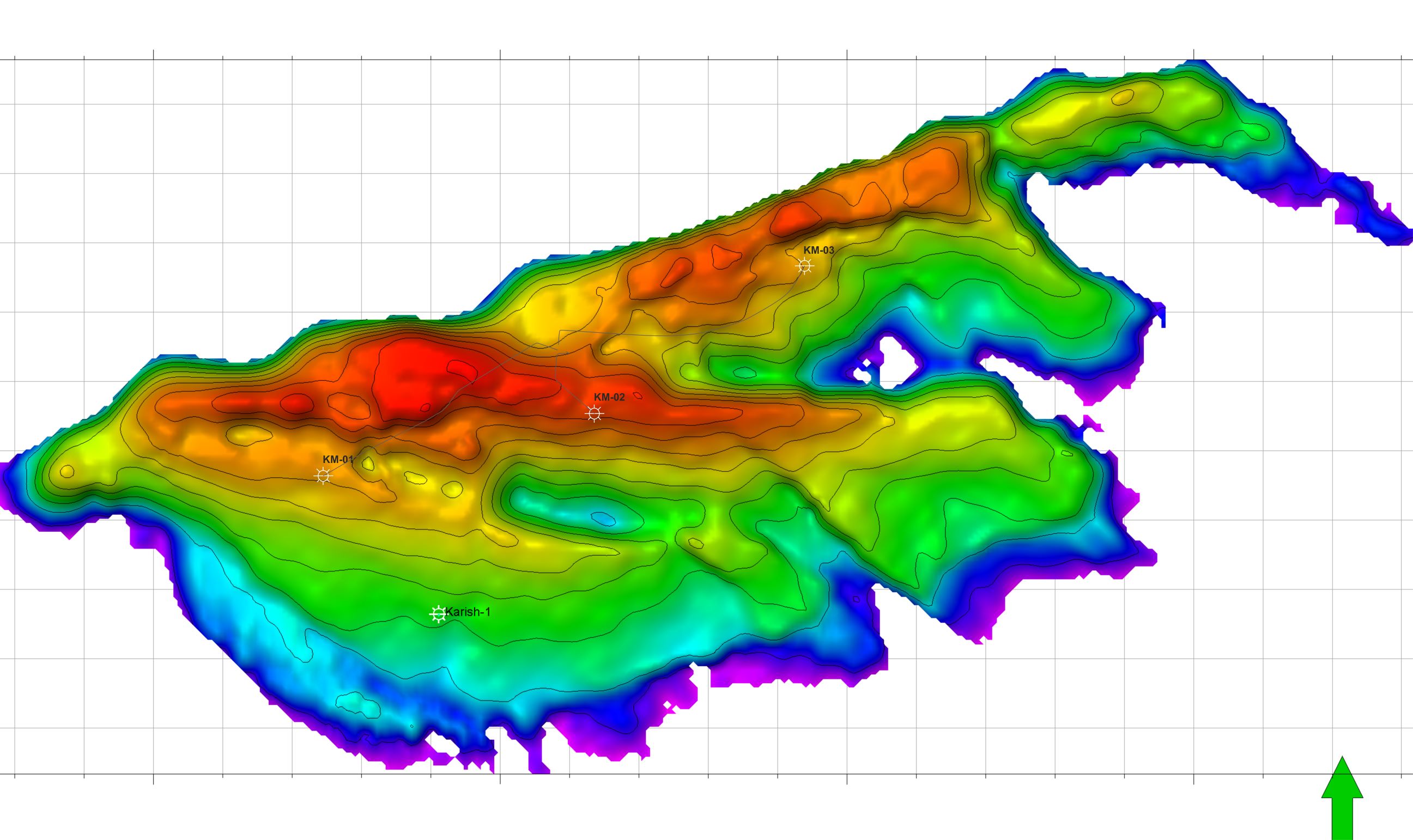
Karish is a significant natural gas and liquids producing field offshore Israel. As per year end 2024, it contains 999.6 gas 2P reserves plus 40.9 mmbls liquids 2P reserves. This represents a total of 222.4 mmboe 2P reserves.*
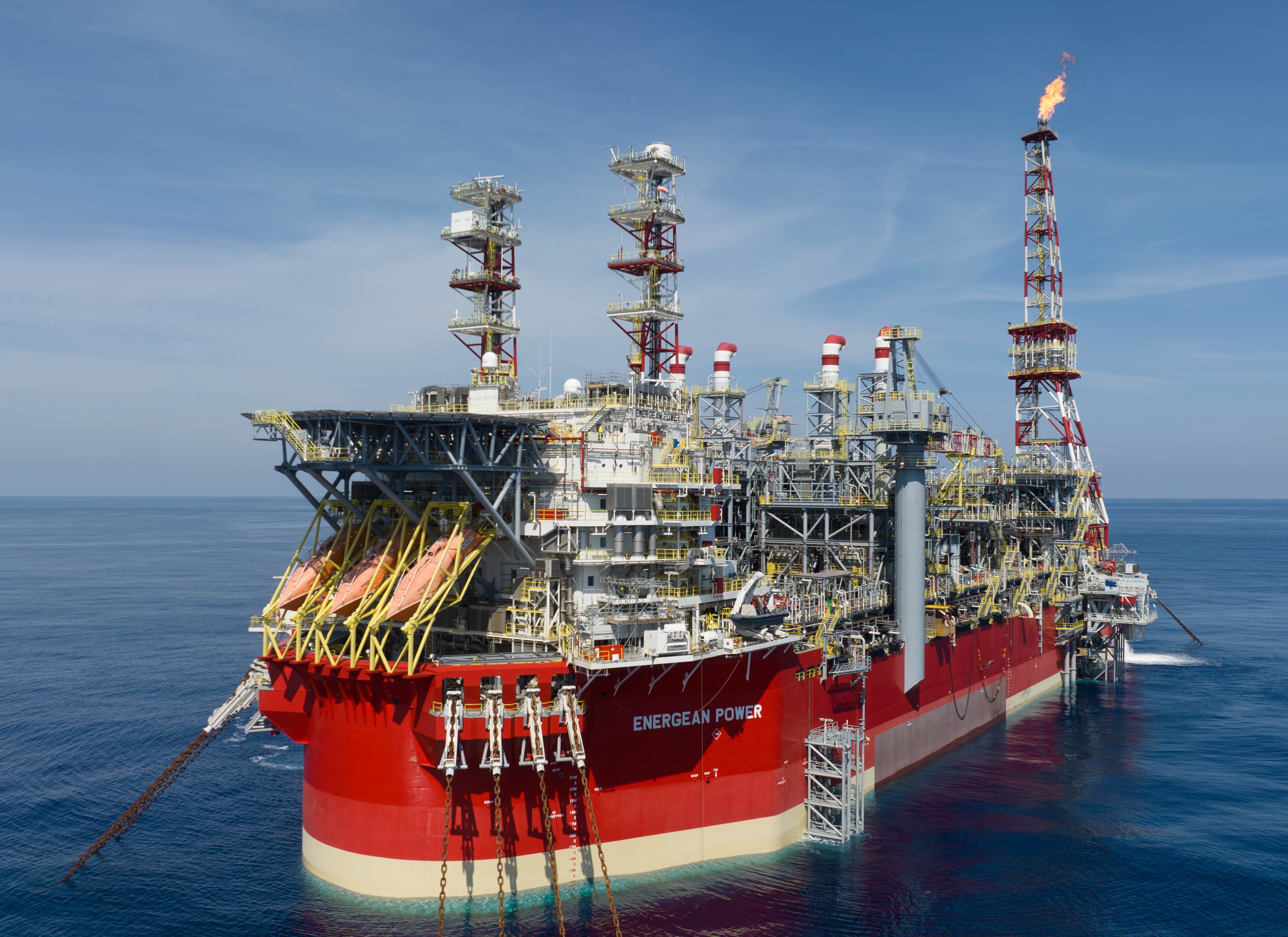
Karish produces natural gas and hydrocarbons liquids through Energean’s regionally unique Energean Power FPSO. Located offshore Northern Israel, it is a major contributor to both energy competition and energy security in Israel.
Production commenced in 2022.
Natural gas produced from Karish is primarily sold to the Israeli power generation sector on long term “take or pay” contracts, providing security of supply and demand for all parties. Approx 20% is sold to industrial users. Hydrocarbon fluids are sold on international markets.

The field
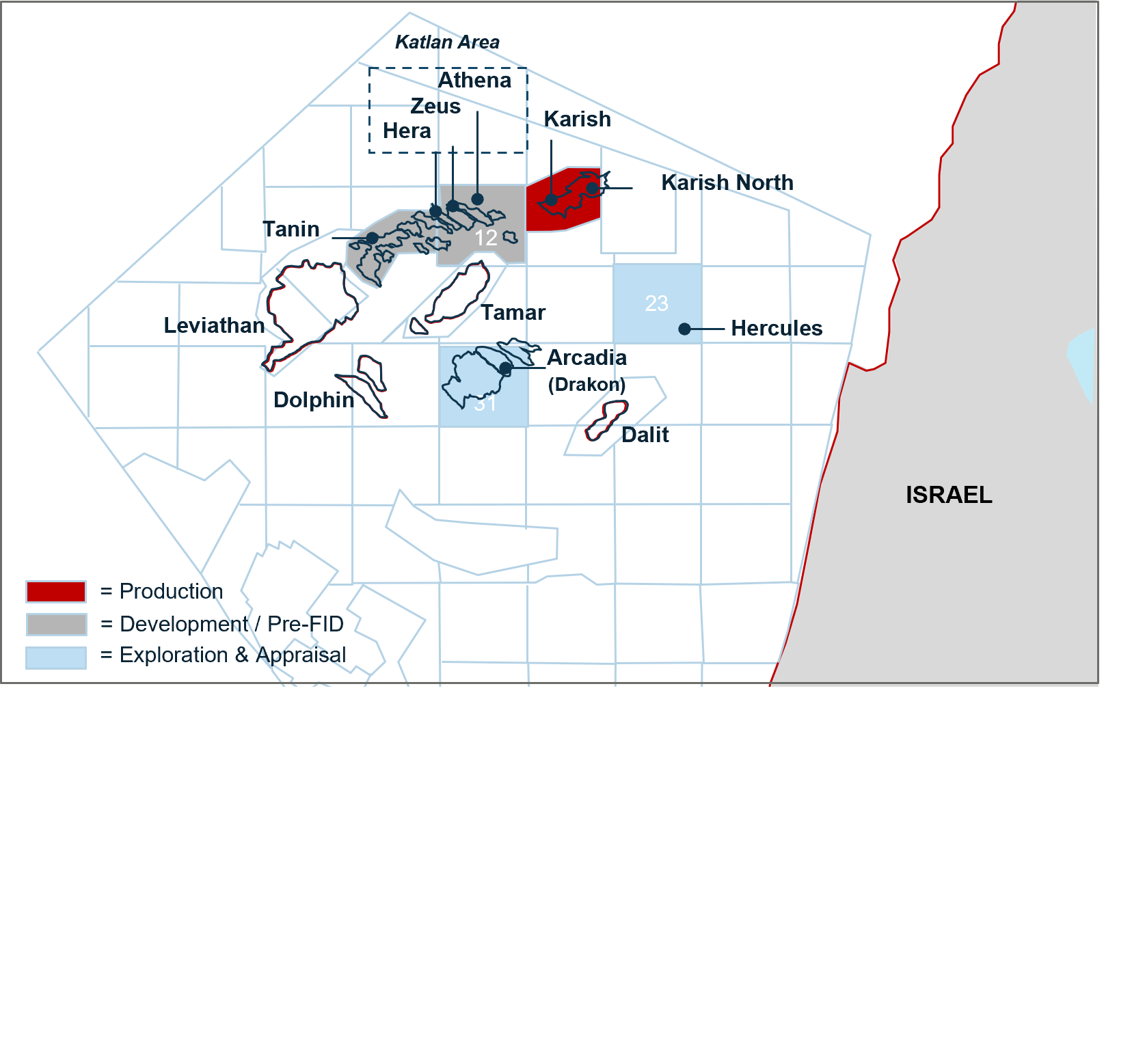
The Karish and Tanin fields, approximately 40 km apart, are located in the north of Israel’s exclusive economic zone (EEZ).
Both fields are part of the prolific Early Miocene Tamar Sands play. The fields are located north of the Tamar field, in water depths exceeding 1,700 metres.
The Karish main field, located within the Karish lease, was discovered in 2013 and is located 25km northeast of the currently-producing Tamar field. The Karish main field is approximately 16km2 with a maximum estimated hydrocarbon column of 300 to 400m.
The Levantine Basin, in which the Karish and Tanin assets are located, contains up to 10,000m of Mesozoic and Cenozoic rocks above a rifted Triassic-Lower Jurassic terrain. The northern boundary of the Levantine Basin is defined by Cyprus and the Larnaca Thrust Zone, and its northwestern margin by the Eratosthenes Seamount. The Nile Delta Cone and the East Mediterranean coast define its southwestern and eastern margins.
The pressure volume-temperature models carried out in Karish demonstrate normal temperature and pressure for the depth of the reservoir. The field has strong vertical and lateral connectivity with faulting not expected to compartmentalise and a single gas-water contact has been evidenced by the seismic available for the Karish main field.
The Karish asset itself is a large two-way closure that sits on the southern upthrow side of a large down-to-the-north fault and is defined by 3D seismic data (2009 and 2010 Noble surveys). The Karish main field was evaluated by Noble in 2013 using a single discovery well (“Karish-1”) which was drilled by Noble to a depth of approximately 4,800m (true vertical depth subsea (“TVDSS”)). The discovered hydrocarbons within the Karish and Tanin Leases are contained with the Early Miocene submarine fan deposits of the Tamar Sands. Seismic data further suggests continuity of the main Miocene sands between the Leviathan, Tanin and Karish fields.
The Tamar Sands are further subdivided into more detailed reservoir units (A-D Sands, with A being stratigraphically the youngest). The C Sands at Karish are approximately 130m TST and are interpreted to be extensive across the entire structure. The fluid in the Karish C reservoir is substantially richer than that discovered in the other Levantine basin fields such as Tanin, Tamar and Leviathan. The B sands at Karish, while thinly bedded, can be identified on the available image logs.
The reservoir at Karish is well defined and well understood as it is analogous to the reservoir sands at Tamar and Leviathan and the 3D seismic data available is of excellent quality.
Within the Karish field a seismic amplitude anomaly associated with the C sands has been identified. This anomaly was tested by Karish-1, and other similar anomalies have been observed in the Karish North Upthrown prospect and the Karish Northeast prospect.
History
In August 2016, Energean acquired the Karish and Tanin fields from Delek Drilling and Avner. Four months later the company was granted approval by the Israeli Government to transfer the two leases to Energean Israel, the Group’s subsidiary. These licenses expire in 2044, with a 10-year extension option.
In December 2016, Energean's subsidiary, Energean Israel, with the financial backing of its partner Kerogen Capital, received from the Israeli Government the approval for the Field Development Plan (FDP) to develop the Karish and Tanin fields via a gas FPSO.
In August 2017, Energean Israel received from the Israeli Government the approval of the FDP for both fields.
Both fields were discovered by Noble in the Levantine Basin in 2011 and 2013.
Karish-1 was spudded on 21 March 2013 and reached a total depth of 4,812 metres The drilling (true vertical depth subsea (“TVDSS”)) lasted 77 days and discovered a gross gas column of 135 metres with 72 metres of net pay over three Tamar A-B-C Sands (90 per cent of net pay in C-Sand).
30-year leases (with a 20-year option extension) were granted in November 2014 covering the fields plus adjacent exploration targets, without gas export rights.
The Israeli Market
The gas produced both from the Karish and Tanin reservoirs is intended to supply the rapidly growing domestic Israeli market.
Israel is one of the world's most rapidly growing natural gas market. In 2024, demand for gas in Israel was just above 13 Bcm. Israel’s long-term gas demand outlook remains robust, with demand forecasted to grow to around 20 Bcm by 2030 and around 25 Bcm by 2040. Natural gas demand increase is driven by the enduring growth in electricity demand, as well as by a transition of fuel mix, from coal and oil to natural gas and renewables.
The main driver for this growth is expected to be an increased demand for electricity in Israel due to population growth, an increasing standard of living, greater use of water desalination, the electrification of the railway system, increased use of air conditioning, the adoption of electric vehicles and the increased use of CNG for transportation.
ENVIRONMENTAL APPROVAL TO DRILL IN THE KARISH DEVELOPMENT
*Competent Persons Report by DeGolyer and MacNaughton YE2024